

welcome to our blog
Seasonal tips, project inspiration, and helpful advice for Northern Virginia homeowners
Why Your Yard Is Still Wet (And What Your Contractor Might Have Missed)
If you’ve ever paid good money to fix a drainage problem, only to find the same soggy mess sitting in your backyard after the next rain, you’re not alone.
It’s one of the more frustrating experiences a homeowner can have. You did the right thing. You called a professional. You wrote the check. And the water came back anyway.
The problem usually isn’t the rain. And honestly, it’s not always the contractor’s intentions either. More often, it comes down to a handful of overlooked details that even experienced crews get wrong. If you live in Northern Virginia, Bristow, Gainesville, Haymarket, Manassas, or anywhere in Prince William or Loudoun County, those details matter more than in most places. Here’s why, and what to watch for.
Northern Virginia Has a Drainage Problem Nobody Talks About
The ground here doesn’t cooperate the way it does in other parts of the country.
Most of Northern Virginia sits on heavy clay soil. Unlike sandy soil, which lets water move through it fairly easily, clay holds moisture near the surface. Add in the rolling hills that naturally channel water downhill, the significant rainfall we get throughout the year, and the ever-increasing amount of driveways, rooftops, and pavement in our growing communities, and you’ve got a lot of water with nowhere to go.
That water goes somewhere, though. And if your yard isn’t set up to handle it correctly, it usually ends up sitting in low spots, pooling against your foundation, or slowly working its way into your basement.
A contractor who truly understands this region will factor all of that in before they ever break ground. One who doesn’t may give you a solution that works great somewhere else, just not here.
The Five Things That Go Wrong Most Often
1. They Skip the Homework
Good drainage work starts before anyone picks up a shovel. It starts with understanding your specific property: where the water comes from, where it wants to go, how your soil absorbs (or doesn’t absorb) moisture, and how your yard slopes.
Skipping that step is the single most common reason drainage projects fail. A system designed around assumptions instead of real data is a system that’s already in trouble.
2. The Grading Is Off
This one sounds simple, but it trips up a lot of crews. Water follows the land. If the grade around your home isn’t sloping correctly, even by a small amount, water will find its way toward your foundation instead of away from it.
Proper grading is the first line of defense for your home. If it’s not right, nothing else the contractor does will fully compensate for it.
3. One Solution, Every Problem
A French drain is a great tool. So is a dry creek bed, a catch basin, or a properly designed swale. But they’re not interchangeable, and no single system works for every yard.
When a contractor shows up with the same answer for every property, that’s worth paying attention to. Your yard has its own unique layout, soil, and water patterns. The solution should be built around those specifics, not pulled off a shelf.
4. Shortcuts in the Installation
Even a well-designed system can fail if it’s not installed correctly. Pipes need to be laid at the right depth and slope. Filter fabric needs to be installed properly so sediment doesn’t clog the system over time. Materials need to be durable enough to hold up for years, not just through the next season.
Cutting corners here might not show up right away. But it usually shows up eventually, and fixing it a second time is rarely cheaper than doing it right the first time.
5. Nobody Mentioned Maintenance
Drainage systems aren’t completely set-it-and-forget-it. Debris, sediment, and roots can gradually reduce how well a system functions. A good contractor will walk you through what to keep an eye on and how to stay ahead of any issues.
If nobody mentioned maintenance before they left your property, that’s a gap worth noting.
Signs the System Isn’t Working
If you’ve had drainage work done and things still don’t look right, trust your instincts. Here’s what to watch for:
Standing water that won’t go away. If your yard is still boggy long after rainfall, the system isn’t doing its job.
Erosion or shifting soil. Gullies forming in the lawn, exposed roots, or mulch washing away are signs that water is still moving across your yard without enough control.
New moisture in your basement. Damp spots, a musty smell, or cracks in your foundation walls after a drainage project can mean water is still working its way toward your home’s structure.
More mosquitoes than usual. Standing water breeds mosquitoes. An uptick in pests is a low-tech indicator that water is still sitting somewhere it shouldn’t be.
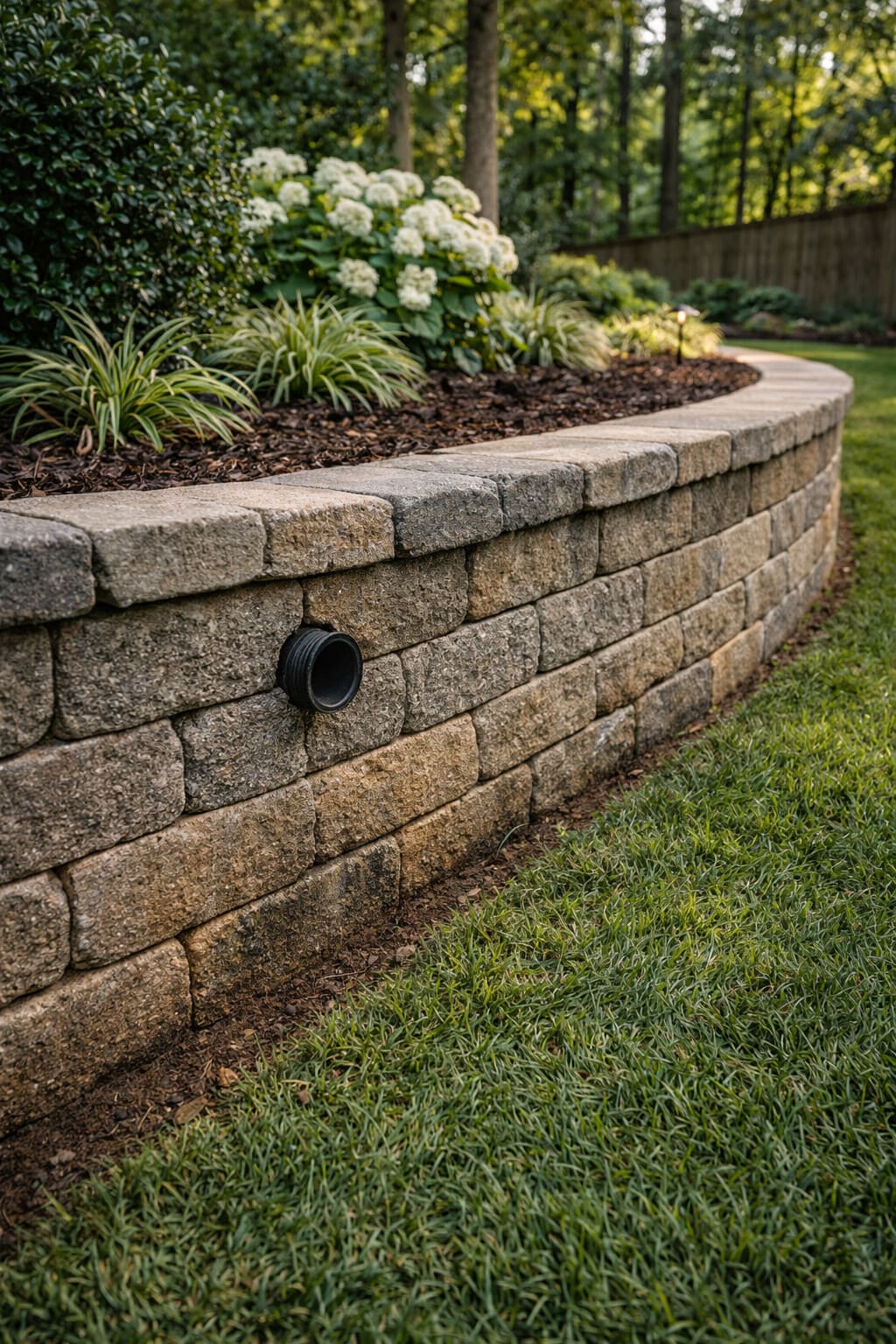
A retaining wall that’s starting to lean or crack. This is often caused by water building up behind the wall, a sign that drainage wasn’t properly incorporated into the design.
What Good Contractors Do Differently
You don’t have to be a drainage expert to tell whether a contractor is approaching your project with the right level of care. Here’s what to look for before you sign anything.
Ask for a detailed proposal. Not just a price, but a real explanation of what they found, what they’re recommending, and why. It should include grading plans, the specific materials they’ll use, and whether permits are required. And if permits are required, a good contractor handles that process for you.
Ask how they’ll assess your property. If they can’t clearly explain how they’re evaluating your soil, your slope, and your water sources, that’s a sign the homework isn’t being done.
Ask about their experience in this area. Northern Virginia’s clay soil and topography are specific challenges. A contractor who’s worked extensively in this region will have a feel for what works here and what doesn’t.
Ask for references from similar projects. And follow up on them.
Expert Drainage Solution Team in Bristow, VA
A wet yard isn’t just inconvenient. It’s a risk to your property, your foundation, and your investment. And in Northern Virginia, where the soil and terrain work against you from the start, getting drainage right requires more than good intentions and a few pieces of pipe.
The good news is that when it’s done correctly, it holds. You shouldn’t have to wonder every time it rains whether the water is going somewhere it shouldn’t.
If you’re dealing with persistent drainage issues or you’re thinking about addressing them before they become a bigger problem, we’re happy to take a look at your property and give you an honest assessment. No pressure, no guesswork. Just a straightforward conversation about what we’re seeing and what we’d recommend.
That’s how we’d want to be treated. So that’s how we work.
Nova Scapes serves homeowners across Bristow, Gainesville, Haymarket, Manassas, and the surrounding Northern Virginia communities. Request a consultation to review your backyard options today.
