

welcome to our blog
Seasonal tips, project inspiration, and helpful advice for Northern Virginia homeowners
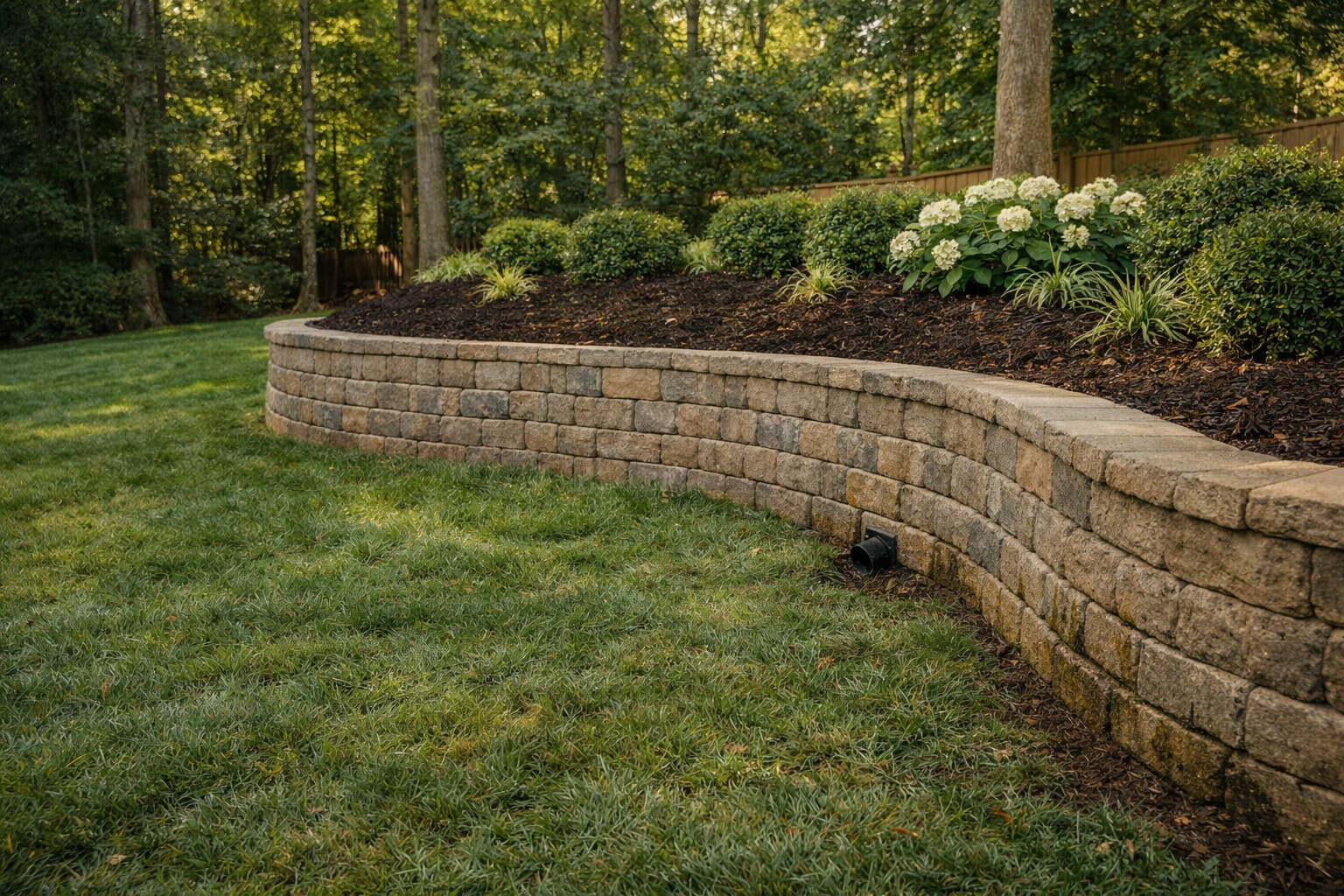
Retaining Wall Problems in Gainesville, VA: What Causes Them and How We Fix Them
If you’ve lived in Northern Virginia for any length of time, you know our terrain has a mind of its own. Rolling slopes, heavy clay soil, and storms that seem to arrive sideways — it all adds up to real challenges for the retaining walls holding your property together.
At Nova Scapes, we work on retaining walls throughout Gainesville, Haymarket, Bristow, and Manassas. We see the same problems come up again and again — and we’ve learned that catching them early saves homeowners a lot of money and headache down the road.
This guide walks you through what retaining walls do, why they fail, and what it takes to fix or build them the right way.
Why Retaining Walls Matter Here
Gainesville isn’t flat. The slopes and elevation changes that make our neighborhoods look great are also the reason so many homes depend on retaining walls to keep soil in place, protect foundations, and create usable outdoor space.
A well-built retaining wall does a lot of quiet, important work. It holds back soil, manages water runoff, prevents erosion, and keeps your landscaping — and in some cases, your home’s foundation — stable year after year. When a wall is done right, you don’t think about it. When it’s done wrong, or when it starts to go, you’ll notice fast.
How Retaining Walls Actually Work
The basic job of a retaining wall is to hold back the lateral pressure of soil. That sounds simple enough, but there’s more to it than stacking blocks.
The real threat to most retaining walls isn’t the soil — it’s water. When water saturates the ground behind a wall and has nowhere to go, that trapped moisture dramatically increases the pressure pushing against the structure. Waterlogged soil can weigh up to 50% more than dry soil. That’s a lot of extra force on a wall that was only engineered for normal conditions.
That’s why drainage isn’t optional. Properly designed walls have a drainage system built right in — perforated pipe at the base, gravel backfill, weep holes — all working together to move water out before it becomes a problem.
Common Materials We Work With
Different situations call for different materials. Here’s a quick look at what’s commonly used in our area:
Segmental retaining wall blocks are the most popular choice for residential properties. They’re versatile, cost-effective, and when installed with proper backfill and reinforcement, they hold up well.
Poured concrete is the stronger option for taller walls or situations where the load demands it. It’s engineered for maximum pressure resistance.
Natural stone looks beautiful and lasts a long time — but it requires real skill to build correctly. Dry-stack or mortared, it’s only as good as the craftsmanship behind it.
Treated timber is a budget-friendly option for smaller, lower walls. It’s worth knowing upfront that timber has a shorter lifespan than stone or concrete and will need more attention over the years.
Why Retaining Walls Fail
Most retaining wall failures don’t happen overnight. They build slowly — one overlooked problem stacking on another — until the wall can’t take it anymore. Here’s what we typically see:
Poor drainage. This is the number one cause of retaining wall failure. If water can’t escape, it builds up, saturates the soil, and dramatically increases pressure on the wall. No drainage system, a clogged system, or a system that was never adequate to begin with — any of these will eventually cause problems.
A weak foundation. A retaining wall is only as solid as its base. If the footing wasn’t dug deep enough, properly compacted, or built for the actual soil conditions on that lot, the wall will shift, settle, or push outward over time.
Wrong backfill material. What goes behind the wall matters just as much as the wall itself. Organic soil, poor compaction, or skipping gravel backfill entirely all add unnecessary weight and reduce drainage — a bad combination.
Overloading. Parking vehicles too close to the wall, adding heavy planters or structures above it, or allowing soil to pile up beyond what the wall was designed for can push it past its limits.
Shortcuts during installation. Rushed construction, missing reinforcement, or using the wrong materials for the conditions — these are the problems that don’t show up on day one but cause real trouble two or three years down the road.
Gainesville-Specific Challenges
On top of the universal issues, our area has a few factors that make retaining walls work harder than they might elsewhere.
Clay-heavy soil. Prince William County is well known for it. Clay expands when it gets wet and contracts when it dries out. That constant movement places repeated stress on retaining walls and demands careful attention to drainage design from the start.
Heavy rainfall. Northern Virginia gets significant annual rainfall, and we’re no strangers to storms that dump a lot of water in a short amount of time. A drainage system that works fine in normal conditions can be overwhelmed quickly during heavy rain — and that’s when walls get into trouble.
Sloped development. Gainesville has grown quickly, and a lot of homes were built on terrain that required walls to make the property usable. Rapid development sometimes means installations that were adequate at the time but weren’t designed with long-term durability in mind.
Freeze-thaw cycles. We’re not in the deep north, but we do get freezing temperatures. When moisture is sitting in the soil behind a wall and temperatures drop, that water expands as it freezes. Over time, repeated freezing and thawing weakens the structure and its foundation.
Warning Signs to Watch For
The earlier you catch a problem, the easier and less expensive it is to fix. Here’s what to look for when you walk your property:
Leaning or tilting. If the top of your wall is visibly pushing away from the slope behind it, that’s a clear sign the pressure behind the wall has gotten the upper hand. Don’t wait on this one.
Cracks. Horizontal, vertical, or stair-step cracks in the wall material all mean the wall is deforming under stress. The size and depth of the cracks tell you how serious things are.
Bulging. Sections of wall that bow outward are under significant pressure. This often signals that soil or water has built up to a level the wall wasn’t designed to handle.
Settling or sinking. If the wall itself looks like it’s dropping, or if the ground in front of it is heaving, the foundation or the underlying soil is compromised.
Water pooling behind the wall. Standing water that doesn’t drain away after rain is a sign the drainage system isn’t working. Left alone, that water will keep pushing.
Deteriorating material. Crumbling concrete, rotting wood, or loose mortar means the wall material itself is breaking down and losing structural strength.
If you’re seeing any of these — especially if the wall is tall, close to your driveway, or adjacent to a neighbor’s property — reach out for a professional assessment. A wall that’s failing near a walkway or structure is a safety issue, not just a landscaping one.
What Failing Walls Cost You
A failing retaining wall doesn’t just look bad. Here’s what’s actually at stake:
Property and safety damage. A collapse can take out patios, driveways, and landscaping. In serious cases, it can undermine the foundation of structures built near the wall. Falling or collapsed walls near walkways and driveways are a real hazard.
Erosion. Once a wall stops doing its job, soil washes away freely. That means damaged landscaping, potential sinkholes, and an erosion problem that will only grow unless it’s addressed.
Property value. A visibly failing wall is a red flag for buyers and can complicate or delay a sale until repairs are made.
Financial liability. If your wall damages a neighbor’s property or injures someone, you may be on the hook for it. Costs for retaining wall repairs range widely — from a few thousand dollars for localized fixes to $20,000 or more for full reconstruction. Dealing with it early almost always costs less than waiting.
How We Approach Repairs and New Builds
Whether we’re fixing an existing wall or starting from scratch, our process is the same: assess the situation thoroughly, understand the cause of the problem, and build a solution that lasts.
For existing walls that have failed, the right fix depends on what we find. In many cases, full reconstruction is the most honest and cost-effective path. Patching over a bad foundation or a failed drainage system rarely holds long-term. Sometimes a partial rebuild is appropriate if damage is localized and the underlying cause is clear. In less severe situations, structural reinforcement or a drainage system upgrade may be all that’s needed.
For new construction, we follow best practices that have stood up over time: proper excavation and foundation depth, geotextile fabric to separate backfill from native soil, clean granular backfill for drainage, geogrid reinforcement where warranted, and a drainage system designed for the actual water load the wall will face. Every project gets materials suited to the specific conditions — not a one-size-fits-all approach.
Choosing the Right Contractor
This is worth getting right. A retaining wall is a structural element of your property, not just a landscaping feature. Here’s what to look for when you’re evaluating contractors:
Experience with retaining walls specifically — not just general landscaping. Northern Virginia soil and weather conditions are particular, and experience here matters.
Proper licensing and insurance. This protects you if something goes wrong during the project.
Clear, written proposals. You should know exactly what work is being done, what materials are being used, what the timeline looks like, and what it costs — before anyone picks up a shovel.
References and a portfolio of completed projects. A contractor who does quality work will have no problem showing you examples and connecting you with past clients.
Keeping Your Wall in Good Shape Long-Term
A well-built retaining wall still needs some attention to stay that way. Here’s what we’d tell any homeowner:
Walk your wall twice a year — and after any significant storm. Look for the warning signs described above. Catching a small crack or minor shift early is a quick fix. Catching it after it’s been ignored for two years is a much bigger job.
Keep your drainage clear. Leaves, soil, and debris clog weep holes and drain pipes. A blocked drainage system defeats the whole purpose of having one. A little maintenance here goes a long way.
Be thoughtful about what you plant nearby. Large trees and shrubs with aggressive root systems can eventually push against a wall’s structure. Plant those closer to the house, not right next to the wall.
Watch what you place on top. Heavy planters, equipment, or excess soil piled above the wall adds load it may not have been designed to handle.
We’re Here When You Need Us
Retaining walls don’t have to be a source of stress. When they’re built right and maintained properly, they do their job quietly for decades. When something looks off, it’s worth getting a set of trained eyes on it before a small issue becomes a big one.
Nova Scapes serves homeowners throughout Gainesville, Haymarket, Bristow, Manassas, and the surrounding communities. If you’ve got questions about a wall on your property — or you want to talk through what a repair or new installation would involve — we’re glad to take a look.
We show up when we say we will, we give you a straight assessment, and we do the work right the first time.
Request a consultation and let’s talk about your property.
